


Barbados and Guyana community story in the UK is richer and more intertwined than most people realised. This is the story of how a London student club helped shape the architectural blueprint for two nations bound by blood, education, and shared diplomacy. Barbados and Guyana share one of the Caribbean’s deepest and most intertwined histories, shaped first by British colonial rule and then by parallel, though sometimes diverging, paths after independence.
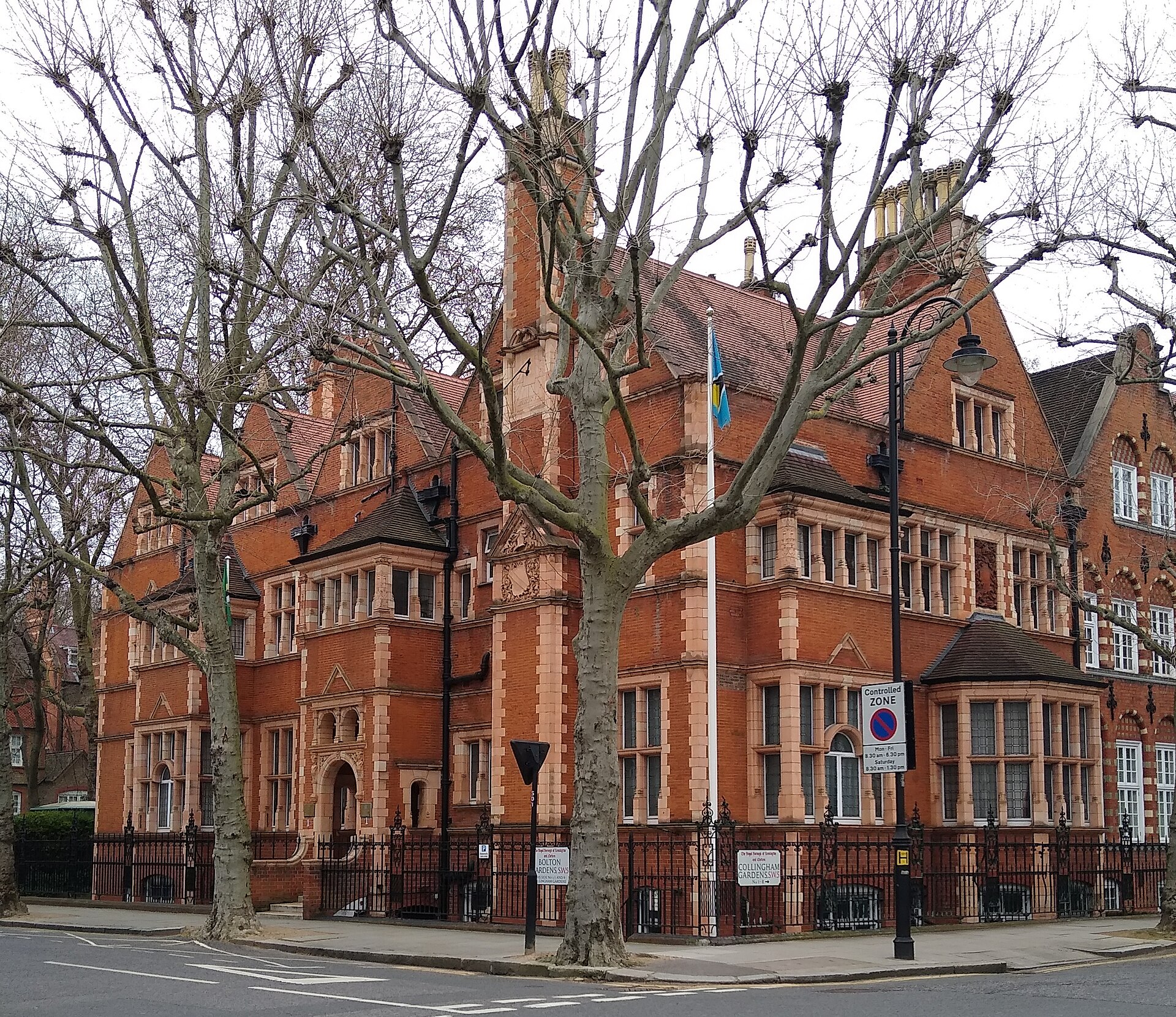
In the mid-twentieth century, a grand Victorian townhouse at 1 Collingham Gardens in Earl’s Court, London, contained a secret. To the passersby, it was merely the West Indian Students’ Centre (WISC). To the future of the Caribbean, it was an important hub.
Within the Centre was a lounge, library, bar, and recreation rooms. Over the decades, it evolved into a landmark institution for the broader African diaspora and British civil rights movements. It served as the base for the West Indian Students Union (WISU), which nurtured future Caribbean leaders such as Michael Manley, Errol Barrow, Linden Forbes Burnham, and Maurice Bishop
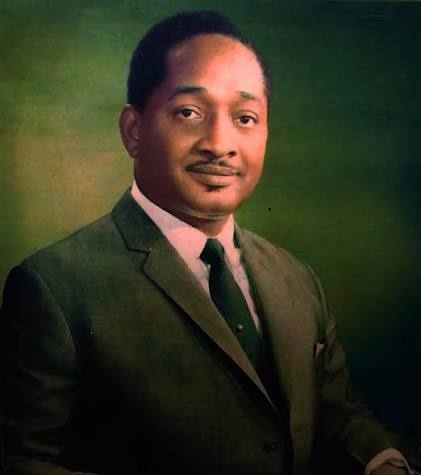
Behind its doors, within the aroma of affordable rice and peas and the clink of glasses at a rare sanctuary from mid-century British racism, a generation of young scholars met. They argued, plotted, and dreamed. Among them were Errol Barrow of Barbados and Forbes Burnham of Guyana, who would later lead their respective nations to independence in 1966. Here, they were student politicians forging a borderless Caribbean identity.
Founded in 1955, WISC and its sister organisation, the West Indian Students Union (WISU), served as the community’s political headquarters. It became a space where local insularities gave way to regional solidarity.
For Barrow (studying at the London School of Economics) and Burnham (at the University of London), WISC was an intellectual sparring ring. Barrow was a pragmatic social democrat; Burnham was a mercurial, rhetorically brilliant socialist. Yet, the personal trust built over pints in Earl’s Court survived their ideological clashes.
When the British-imposed West Indies Federation collapsed in 1962, this London cohort helped redirect the region from fragmentation. Barrow and Burnham rejected rigid political over-centralisation; instead, they pursued pragmatic, functional economic integration.
In 1965, alongside Antigua’s Vere Bird, they signed the Dickenson Bay Agreement to launch CARIFTA. By 1973, alongside Trinidad and Jamaica, they expanded this cooperation into CARICOM via the Treaty of Chaguaramas, showing that regional unity could preserve individual sovereignty.
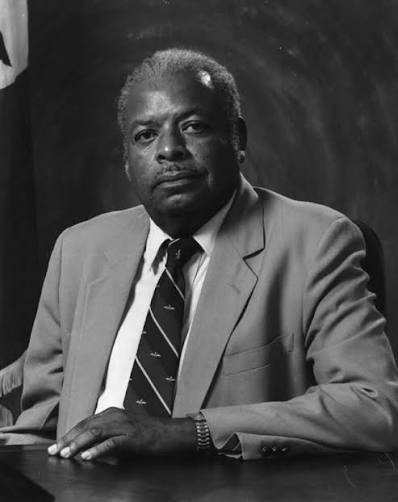
While Barrow and Burnham built the superstructure of this relationship in the 1950s, thousands of working-class Caribbean migrants had laid the foundation a century earlier. Their movement across the region had already created the conditions for this cooperation. That earlier migration story forms the next layer of the argument.
Between 1860 and 1940, between 40,000 and 60,000 Barbadians migrated to British Guiana (now Guyana). Post-emancipation, Barbados was tiny and overpopulated; Guyana was a vast continent-colony desperate for labour.
This migration created a profound historical loop. The rigorous Barbadian educational model, carried by Bajan educators into Guyana, shaped the minds of young Guyanese scholarship winners like Burnham and Cheddi Jagan. That background helped send those same students to London, where they walked into WISC and shook hands with Errol Barrow to chart the future of the modern Caribbean. In this way, education, migration, and diplomacy came together.
Nowhere was this cooperative spirit more evident than after independence. Facing thin budgets and major logistical obstacles in late 1966, Barbados and Guyana made an unprecedented move in modern statecraft: they opened a joint diplomatic mission.
This arrangement gave Barbadian and Guyanese migrants in the UK a shared consular space, which helped shape early community networks, cultural collaboration, and political cooperation.
From the late 1960s into the early 1970s, Barbados and Guyana operated a joint diplomatic mission in London, first at 28 Cockspur Street and later at 6 Upper Belgrave Street. At its centre, they appointed one man—the celebrated Guyanese lawyer Sir Lionel Luckhoo.
Barbadians and Guyanese shared the same waiting rooms for documents, passports, and letters of introduction. As people sought help with immigration, employment letters, or repatriation, they encountered one another there, early cultural events, independence celebrations, and Commonwealth gatherings regularly brought both communities together. The mission became a gathering place for Caribbean students, nurses, domestic workers, and new arrivals.
After independence in 1966, Guyana became widely regarded as the “breadbasket of the Caribbean,” and that drew Barbadians seeking agricultural and economic opportunity.
By the late 1960s and 1970s, Guyana had adopted cooperative socialism, while Barbados followed a more mixed, service-oriented economic model. Because these choices differed, they shaped each country’s development for decades.
Their diverging geopolitical paths eventually led to separation in the 1970s, as Guyana became a Cooperative Republic and moved leftward during the Cold War. Even so, the Cockspur Street period showed that pan-Caribbean unity was not just student idealism; it could also function as practical foreign policy.
The borderless Caribbean identity born over hot meals at Collingham Gardens has broken out of parliamentary chambers and onto the playing fields. Today, regional sports tournaments serve as the ultimate display of unity in action. When athletes gather from across the archipelago and mainland, they carry the exact legacy of cross-border camaraderie envisioned by CARICOM’s founders.
That story has achieved a poetic modern renaissance. After decades of economic divergence and a painful period of immigration friction in the 2000s, symbolised by the controversial “Guyanese Bench” at Grantley Adams International Airport, Barbados and Guyana have reunited in practice.
Driven by Guyana’s massive economic transformation as a global oil producer and Barbados’ logistics expertise under Prime Minister Mia Mottley, the two nations have shattered old barriers. As a result, regional cargo ferries stream between their ports, and citizens can travel between Barbados and Guyana passport-free, using only national identification cards.
Today, 1 Collingham Gardens no longer houses students; it functions as the shared diplomatic offices of Dominica and Saint Lucia. But the building’s legacy remains unchanged. The young student activists of the 1950s imagined a Caribbean beyond artificial borders, and that vision still lives on at Earl’s Court. The building closes the circle.
.
