


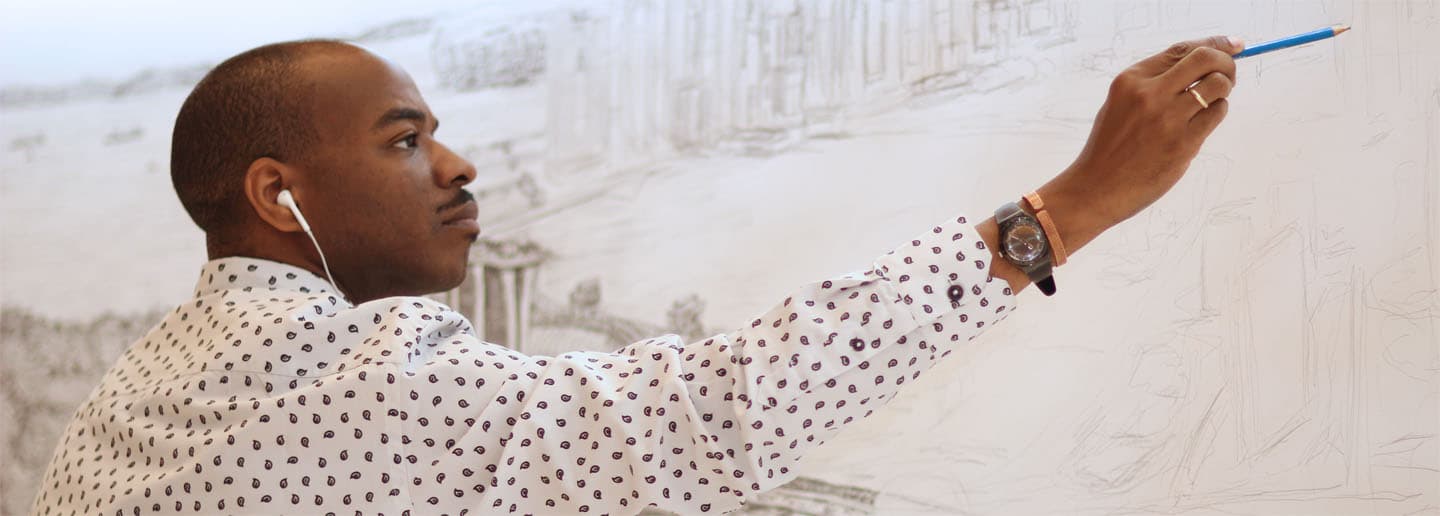
Across the global Barbadian community, certain individuals are distinguished by their extraordinary contributions to culture, creativity, and human achievement. Among them is Stephen Wiltshire MBE, the world‑renowned architectural artist whose ability to draw entire cities from memory has enthralled millions. His story represents genius emerging from silence, nurtured by compassion, and carried forward by heritage, a Barbadian legacy written across the world’s skylines.
Stephen was born in 1974 in Little Venice, Maida Vale, West London, to Colvin Wiltshire, a Barbadian father, and Geneva, a St. Lucian mother. His father’s migration placed Stephen in the post-independence lineage of Caribbean families who built new lives in Britain while carrying the cultural strength of home.
Though Stephen grew up in London, his Barbadian identity has always been part of his story. Barbados has proudly acknowledged this connection, arranged exhibitions of his work, and celebrated him as a recognised member of the Barbadian community. His artwork has been showcased by the Barbados High Commission, which publicly honoured his achievements and accentuated his Barbadian lineage. These events were treated as cultural homecomings, affirming Stephen as one of Barbados’ global artistic ambassadors.
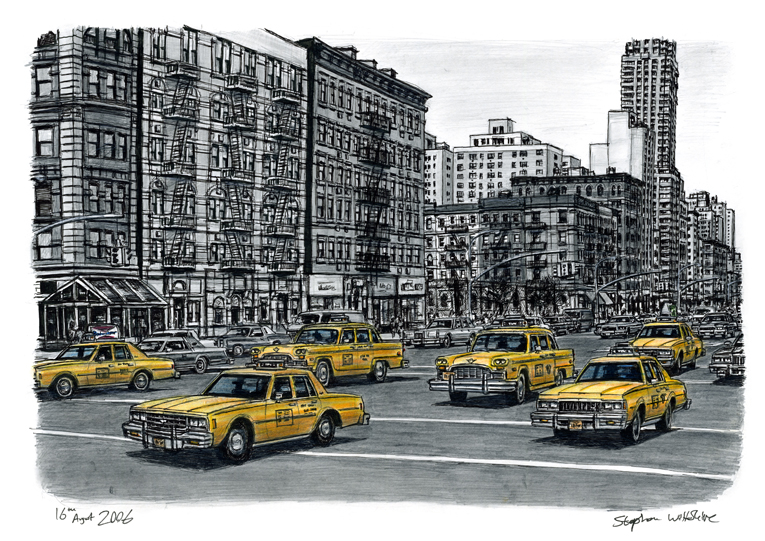
Wiltshire extraordinary gift arrived without words because, as a child, he had none. Diagnosed with autism at age three, Stephen was completely mute and had difficulty connecting with the environment around him. But while speech eluded him, drawing did not. His teachers at Queensmill School noticed that Stephen communicated through images. He drew animals with anatomical precision, London buses with perfect proportions, and buildings with a precision no child his age should possess.
The breakthrough happened when his teachers gently removed his art materials to encourage him to speak. Desperate to draw, Stephen uttered his first word: “Paper.” That single word was the first sign of a genius whose mind could see and remember everything. By age seven, he was drawing London’s skyline with architectural fidelity. By eight, former Prime Minister Edward Heath commissioned him. By nine, he was speaking fluently. At adolescence, he was already being described as one of Britain’s most gifted draughtsmen.

There are many people Who Helped Shape His Early Years: Individuals who recognised his brilliance early supported Stephen’s rise and ensured it was nurtured with care. They were the first to understand that Stephen’s drawings were not just pictures; they were language. Their patience and insight unlocked his ability to communicate.
Former President of the Royal Academy of Arts saw Stephen on television and immediately recognised his extraordinary ability, calling him “possibly the best child artist in Britain.” Casson championed Stephen’s talent and opened doors that would shape his future.
Casson introduced Hewson, who became Stephen’s literary agent and protector. She ensured his earnings were safeguarded, guided his early career, and helped publish his first book, Drawings (1987). Her stewardship ensured Stephen’s gift was never exploited. The renowned neurologist met Stephen in New York and was astonished by his abilities. Sacks accompanied him on drawing tours, wrote about him in An Anthropologist on Mars, and introduced his story to worldwide audiences.
These individuals formed the foundation of Stephen’s early support system, a network that recognised his genius and helped shape his future. Stephen’s ability to draw entire cities from memory has earned him the nickname “The Human Camera.” His most iconic works include:
* A thirteen‑foot panorama of London drawn after one helicopter ride. A nineteen‑foot drawing of New York City created from memory. * A ten‑metre Tokyo skyline, completed in eight days using only pen. His drawings are not merely technically flawless; they capture each city’s soul.
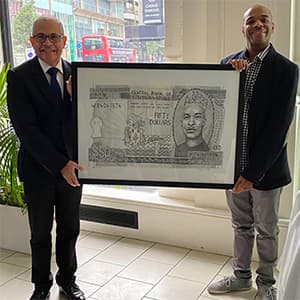
Barbados has proudly honoured Stephen’s achievements. His exhibitions on the island and the High Commission’s public recognition of his work affirm his place within the Barbadian cultural narrative. These honours reflect Barbados’ devotion to celebrating its diaspora—acknowledging that Barbadian quality is not confined to the island but shines across the world. Stephen’s homecoming exhibitions were moments of national pride, as Barbadians embraced a global artist whose heritage traces back to their own shores. Stephen continues to work actively and prolifically. His current work includes:
He regularly produces new city panoramas worldwide, including recent works from London, Doha, Mexico City, and Tokyo. His permanent gallery in the Royal Opera Arcade, London, is a cultural landmark that draws visitors from around the world. He still travels for major commissions, drawing skylines live before audiences who watch his memory unfold on paper. He shares new work and behind-the-scenes videos through his official website and social platforms, connecting with a global fanbase.
Stephen continues to enjoy music deeply, listening to all genres while drawing, and occasionally plays piano, supported by his perfect pitch. Stephen Wiltshire’s story shows the power of Barbadian heritage. His life reflects the ideals that define Barbados:
* creativity
* humility
* excellence
* global impact
He is not only an artistic savant. He is a Barbadian legacy. A global phenomenon.
Stephen Wiltshire remains a powerful symbol of talent, resilience, and heritage, and a sign that the island’s legacy shines beyond its shores. So, continues to share with the world.
