


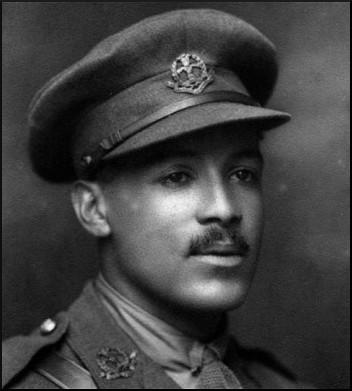
In 2016, during Barbados’ Golden Jubilee celebrations in the United Kingdom, Walter Tull was posthumously awarded the Barbados Jubilee Award, recognising him as a son of Barbadian heritage whose courage, service, and sacrifice transcended borders.
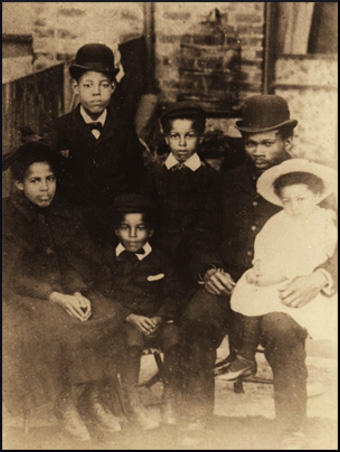
Walter Daniel John Tull was born on 28 April 1888 in a modest house on Walton Road, Folkestone, Kent, England. His father, Daniel, had crossed the Atlantic from Barbados years earlier, the son of a man born into slavery, determined to build a freer life in England. He worked as a carpenter, married a local woman, Alice Palmer, and raised six children with her.
Childhood did not always honour innocence. When Walter was seven, cancer took his mother. A year later, his father remarried Alice’s cousin, Clara, and the family briefly steadied itself. Miriam, a baby girl, arrived in September 1897. Three months later, heart disease claimed Daniel too. Clara was left alone with a newborn and five stepchildren, and the family could not hold together.
A Methodist minister painfully suggested that the family send the two school-age boys, Walter and his brother Edward, to the Children’s Home and Orphanage in Bethnal Green. Poverty, not a lack of love, drove the decision. Even the Poor Law officials hesitated, writing to the orphanage: “The father of these children was a negro, and they are consequently coloured children.” The reply was simple: it made no difference. So, the boys went.
The orphanage was strict, Methodist, and orderly. Walter learned a trade in the print shop; Edward sang in the choir. Their relationship, already strained by grief, broke again when a Glasgow dentist named James Warnock saw Edward performing and adopted him. Walter was devastated. The Warnock’s tried to keep the brothers connected, but the separation left a mark that never faded.
Walter stayed, worked, grew, and played football, the one place where he felt himself fully.
At fourteen, he left school for work in the printing industry, but football remained his heartbeat. At twenty, he earned a trial with Clapton FC, an East London amateur club. His rise was astonishing; within months, he was playing inside left for the first team and helping Clapton win three major trophies in a single season. Newspapers praised his “clever footwork” and called him the “catch of the season.”
In 1909, Spurs signed him, a leap so dramatic it seemed almost unreal. He toured South America with the team, returned home, and signed professional terms. For a boy raised in a Methodist orphanage, where “Muscular Christianity” taught that sport should build character rather than earn wages, professionalism was a moral crossroads. Walter moved forward and chose it.
On the pitch, he dazzled. One reporter wrote that his performance “must have astounded everyone who saw it.” He also endured racist abuse, most notoriously at Bristol City, where a section of the crowd hurled insults described as “language lower than Billingsgate.” Another reporter defended him, calling him “a model for all white men who play football.”
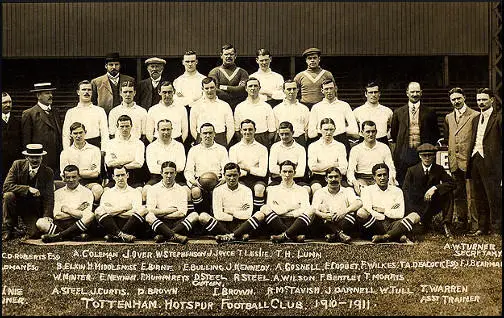
Despite his talent, Walter was quietly dropped to the reserves. Prejudice played its part. In 1911, he moved to Northampton Town under the innovative manager Herbert Chapman. Chapman valued intelligence, discipline, and strategic reasoning, qualities Walter possessed in abundance. He played more than one hundred games, became a fan favourite, and once scored four goals in a single match.
Meanwhile, Edward Tull-Warnock trained as a dentist in Glasgow and became Britain’s first Black dentist. He built a respected practice, married, and became known for his singing voice and golf skills. In 1914, Glasgow Rangers tried to sign Walter. But war intervened. As soon as Britain declared war, he enlisted in the newly formed Football Battalion, the 17th Battalion of the Middlesex Regiment, a unit created to encourage professional players and supporters to join the fight.
The battalion was commanded by Major Frank Buckley, a man known for discipline and grit. Walter fit the mould perfectly. His leadership qualities were obvious from the start. He was calm, steady, and respected. Promotion came quickly: private, then corporal, then sergeant. Walter arrived in France in November 1915. The battalion was billeted miles behind the lines, but the waiting was its own torment. In a letter to Edward, he wrote about the monotony, the cold, and what trench life would bring.
When the battalion finally moved forward, Walter faced the brutal reality of the Western Front: mud, shellfire, and the constant threat of death. In May 1916, he suffered “acute mania”, what we now recognise as shell shock, and was sent home. He recovered, returned to duty, and fought in the Somme, one of Britain’s bloodiest battles.
He survived trench fever, bombardment, and the grinding attrition of trench warfare. And still he rose.
The British Army’s regulations were explicit: no man of colour could become an officer. Under the Manual of Military Law, Black soldiers of any rank were considered “undesirable.” Military chiefs argued that white soldiers would not accept orders from men of colour and insisted that Black soldiers should not serve on the front line. This thinking had deep roots: forty‑four years earlier, the War Office had argued that the army should be “wholly White,” despite centuries of Black presence in British military history.
An African trumpeter served in Henry VII’s court in 1507. An African Roman emperor, Septimius Severus, once ruled Britain in the third century. A division of Moors was stationed at Hadrian’s Wall. The Romans accepted a “rainbow army,” but sixteen hundred years later, the British elite could not.
In 1886, Lord Wolseley warned:
“Let us keep our British Regiments strictly British… If ever we begin to fill our ranks with alien races, our downfall will most surely follow.”
Yet Black soldiers enlisted and fought in the First World War.
Walter’s own brother, William Tull, served in the Royal Engineers. Other Black servicemen included Charles Augustus Williams of Barbados, father of Doncaster Rovers’ footballer and comedian Charlie Williams, and Nigerian students Eugene and John Brown, who served in the 5th North Staffordshire Regiment. Despite these contributions, the Army Council did not officially allow British and colonial Black men to enlist in the UK until 1918, during a severe manpower shortage. Against this backdrop of exclusion and prejudice, Walter Tull’s 1917 commission shattered the colour bar and marked a historic turning point.
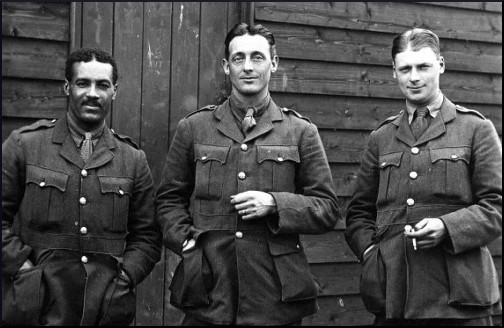
Walter served on the Italian Front, where he led his men across the Piave River under heavy fire, earning praise for his “gallantry and coolness.” He became the kind of officer soldiers trusted instinctively: steady, brave, and utterly committed to his men.
On 25 March 1918, as the German Spring Offensive tore through the Western Front, Walter Tull fell in battle near Favreuil. His men tried desperately to reach him, braving relentless machine‑gun fire, but Walter died where he fell. His body was never found…
Walter Tull’s legacy has grown steadily across generations. Football clubs, military historians, authors, and community leaders have honoured him. Schools teach his story, and museums commemorate him.
In 2014, Royal Mail honoured Walter Tull with a First World War commemorative stamp, placing him among Britain’s most celebrated wartime heroes. His portrait now travels across the country and around the world, a fitting tribute to a man who crossed boundaries, broke barriers, and led with courage.
The Royal Mint issued a £5 coin featuring Walter Tull as part of the First World War centenary collection, further cementing his place in national memory. Walter was recommended for the Military Cross, but his family never received it. Historians argue that awarding it would have forced the War Office to acknowledge that racial barriers had been broken. The campaign for recognition continues today, keeping that unfinished story in view.
His superiors saw his intelligence, discipline, and courage, and recommended him for officer training. In May 1917, he was commissioned as a Second Lieutenant, the first Black combat officer in the British Army. It was a quiet revolution. A man the system said should never lead was now responsible for the lives of white soldiers.
Walter was sent to the Italian Front, where the British Army supported Italian forces against Austria‑Hungary. The terrain was harsh, the winters bitter, and the fighting relentless.
During a daring night raid across the Piave River, Walter led his men through heavy fire, guiding the covering party across the water and back without a single casualty. His commanding officer praised his “gallantry and coolness,” noting that he was one of the first to cross the river.
He had become the kind of officer soldiers trusted instinctively: steady, brave, and utterly committed to his men. In early 1918, Walter returned to France for the German Spring Offensive, a massive push intended to break Allied lines before American troops arrived in force.
On 25 March 1918, near Favreuil, Walter led his men into No Man’s Land. A German bullet struck him. His men tried desperately to retrieve his body, risking their lives under machine-gun fire, but Walter died where he fell. His body was never recovered.
Lieutenant Pickard wrote to Edward: “He was brave and conscientious… personally I have lost a friend.”
Walter was recommended for the Military Cross, but his family never received it. Some believe awarding it would have forced the War Office to admit that racial barriers had been broken. Edward campaigned for recognition until he died in 1950, and the fight continued in the years that followed. In the decades that followed, Walter’s story grew through books, campaigns, and a petition led by Michael Morpurgo. In 2014, the Royal Mint honoured him with a commemorative coin, placing his face among the heroes of the First World War.
He was a football pioneer, a British Army pioneer, and a man who carried dignity through every injustice he faced.
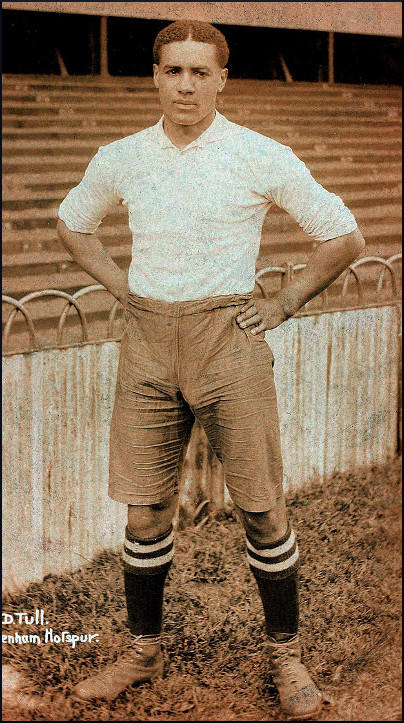
During the United Kingdom’s 2016 Barbados Golden Jubilee celebrations, Walter Tull was posthumously awarded the Barbados Jubilee Award, recognising him as a son of Barbadian heritage whose courage and service transcended borders.
In 2014, Royal Mail honoured Walter Tull with a First World War commemorative stamp, placing him among Britain’s most celebrated wartime heroes. His portrait now travels across the country and around the world, a fitting tribute to a man who crossed boundaries, broke barriers, and led with courage.
The Royal Mint issued a £5 coin featuring Walter Tull as part of the First World War centenary collection, further cementing his place in national memory. Walter was recommended for the Military Cross, but his family never received it. Historians argue that awarding it would have forced the War Office to acknowledge that racial barriers had been broken.
The campaign for recognition continues today, keeping that unfinished story in view.
His story is not simply history; it is a memorial.
