


An edited article by the late Barbadian historian Dr Karl Watson
Barbados was one of England’s most popular colonies, with a rich economy based on sugar and slavery. Yet it was also the only colony to support the abolition of the slave trade.
Early settlement
Barbados was England’s first successful tropical export colony, considered highly prosperous in the late seventeenth century. English private capital, supported by the Crown, settled there in 1627. Early profits came from tobacco, but when Virginian tobacco oversupplied the European market, Barbados shifted to profitable sugar production in the 1650s.
During the early years of settlement, Barbadian colonists faced no resistance from European rivals or indigenous populations. Instead, Amerindians from Guiana were brought in to teach survival skills like local food preparation and forest clearing. The Dutch also supported the colony. By 1639, Barbados had established a locally elected House of Assembly that governed alongside an advisory Council, the Governor, and the Anglican Church.
…profound demographic and economic changes created a whole new society.
Initial failures with alternative crops led Barbados to economic success when the expelled Dutch and Sephardic Jews from Brazil brought sugar expertise. Planters like the Draxes facilitated the transfer of the sugar industry by taking advantage of the island’s ideal conditions. Within twenty years, the Sugar Revolution drastically altered Barbados, resulting in widespread deforestation and significant demographic and economic shifts.
Imported manpower
Sugar production in Barbados required extensive labour, leading to rapid population growth and making it the most densely populated English colony. Early workers were largely white indentured servants or prisoners from Britain, including West Country men exiled after the Somerset uprising and nearly 7,000 Irish transported during Cromwell’s era. Barbados soon had the largest white population among English colonies and served as a launch point for further colonisation in Jamaica, the Carolinas, and beyond.
…the high mortality rate…necessitated a constant input of fresh slaves…
As white labour costs increased in England, planters turned to West Africa—on the advice of Dutch and Sephardic merchants—for slaves, mainly from Ghana (Asante, Ewe, Fon, Fante) and Nigeria (Yoruba, Efik, Igbo, Ibibio). From 1627 to 1807, approximately 387,000 Africans were forcibly shipped to Barbados in harsh conditions, and many were later sent to other colonies. Due to high mortality rates on sugar plantations, fresh arrivals were continually needed to sustain the workforce.
Population
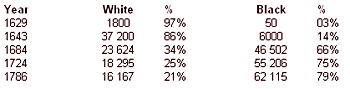
The island transitioned from a predominantly white to a mostly black population, resulting in significant social and cultural changes. This shift raised concerns about internal security and prompted the establishment of legal and policing systems to manage the large slave population, who were likely to resist their status through various means.
This image shows the population figures for the selected dates
Population shifts in Barbados led to creolisation, with West African and West European cultures blending under local conditions to shape a unique Barbadian variant of West Indian culture. Eighteenth-century visitors noted these changes, especially among the white population, who adopted elements of African speech and style.
Contrary to the belief that African traditions were erased among the black population, planters actually encouraged cultural retention, such as dances and social activities, to increase productivity. Efforts to acculturate former slaves to European norms only began after emancipation in 1834, mainly driven by the Anglican Church.
Demographics
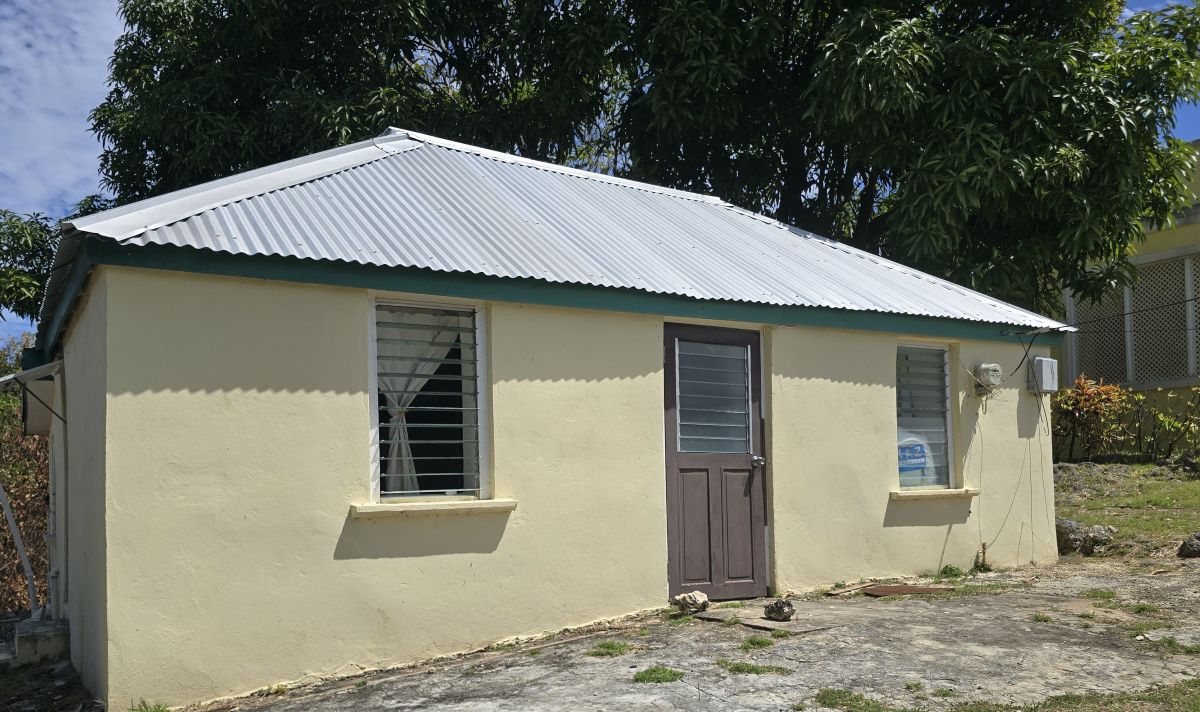
A slave hut in Barbados was made from local trees and leaves. The population dynamics in Barbados differed from those of other English Caribbean colonies: while blacks were a majority, the race ratio was less extreme. In the late seventeenth century, blacks outnumbered whites two to one; in the eighteenth century, three to one—lower ratios than elsewhere. This allowed quicker integration of Africans and enabled planters to control the black enslaved population by using poor whites as a police force. Over 60% of Barbadian whites were poor, and 35% owned no slaves.
…tis to me the first country in the world.
Barbados had a higher percentage of permanent white residents, especially among land-owning elites, leading to more advanced amenities and infrastructure, such as quality schools and social facilities. The black population, mostly locally born Creoles from the early eighteenth century, also developed a unique Barbadian identity. Both racial groups had more women than men, differing from other Caribbean islands. As a result, the black population sustained itself through natural increase in the late eighteenth century, unlike other West Indian islands that relied on African imports due to high mortality rates.
Abolition
Barbados was unique among British Caribbean islands in supporting the act to abolish the slave trade, mainly because its growing enslaved population ensured continued sugar production. In contrast, other territories like Trinidad and Tobago depended on new slave imports for economic growth. While Barbados’s support for abolition was largely economic, influential white Barbadian abolitionists such as John Alleyne and R.B. Niccols also played a sincere role in the movement.
...slaves were re-exported, to Mexico…and to Venezuela from Barbados.
Barbados played a significant role in the slave trade due to its strategic location and favourable trade winds, becoming a hub for exporting slaves to North America, other Caribbean islands, and Venezuela. After the War of Spanish Succession, England gained permission to export slaves, leading the Royal African Company to open offices in Jamaica and Barbados, which facilitated re-exportation to Mexico and Venezuela, respectively.
Olaudah Equiano gives a moving description of the Middle Passage and his arrival in Barbados as a captured African.
“The first object which saluted my eyes when I arrived on the coast was the sea, and a slave ship, which was then riding at anchor, and waiting for its cargo. These filled me with astonishment, which was soon converted into terror when I was carried on board… I was soon put down under the decks, and there I received such a salutation in my nostrils as I had never experienced in my life: so that, with the loathsomeness of the stench, and crying together, I became so sick and low that I was not able to eat, nor had I the least desire to taste anything. I now wished for the last friend, death, to relieve me.”
Barbados underwent rapid changes after settlement, including swift deforestation and a major demographic shift as Africans arrived to work in the sugar industry. Sugar quickly brought wealth, making Bridgetown a vital port alongside Boston and London. Although Jamaica overtook Barbados economically by the mid-eighteenth century, Barbados remained an influential English colony, defined by a stable slave society controlled by a resident white elite and marked by its distinct identity.
Find out more
Books
The History of Barbados by Hilary Beckles – Why Sugar? Economic Cycles and the Changing of Staples in the English and French Antilles, 1624-1654by Robert Carlyle Batie, in the Journal of Caribbean History. Vol 8 (1976)
Man’s Influence on the Vegetation of Barbados, 1627 to 1800 by David Watts, in Occasional Papers in Geography, no.4 (University of Hull, 1966)
Changing Identity in the British Caribbean: Barbados As A Case Study in Colonial Identity in the Atlantic World, 1500- 1800 by Jack P Greene, Nicholas Canny and Anthony Pagden, eds
Barbados, The Civilised Island, A Social History 1750 to 1816 by Karl Watson
Places to visit: The Journal of the Barbados Museum and Historical Society (1934 to date) is also a rich source of Barbadian history.
About the author: The late Dr Karl Watson was a Senior Lecturer in the Department of History, University of the West Indies. He was the Editor of the Journal of the Barbados Museum, Secretary (Hon) of the Barbados National Trust, Chairman of the George Washington House Restoration Committee, and the Barbados/Carolinas Committee. His publications include Barbados: The Civilised Island, A Social History 1750 to 1816, The White Minority of the Caribbean (with H. Johnson), and Old Doll, Matriarch of Newton Plantation.
