


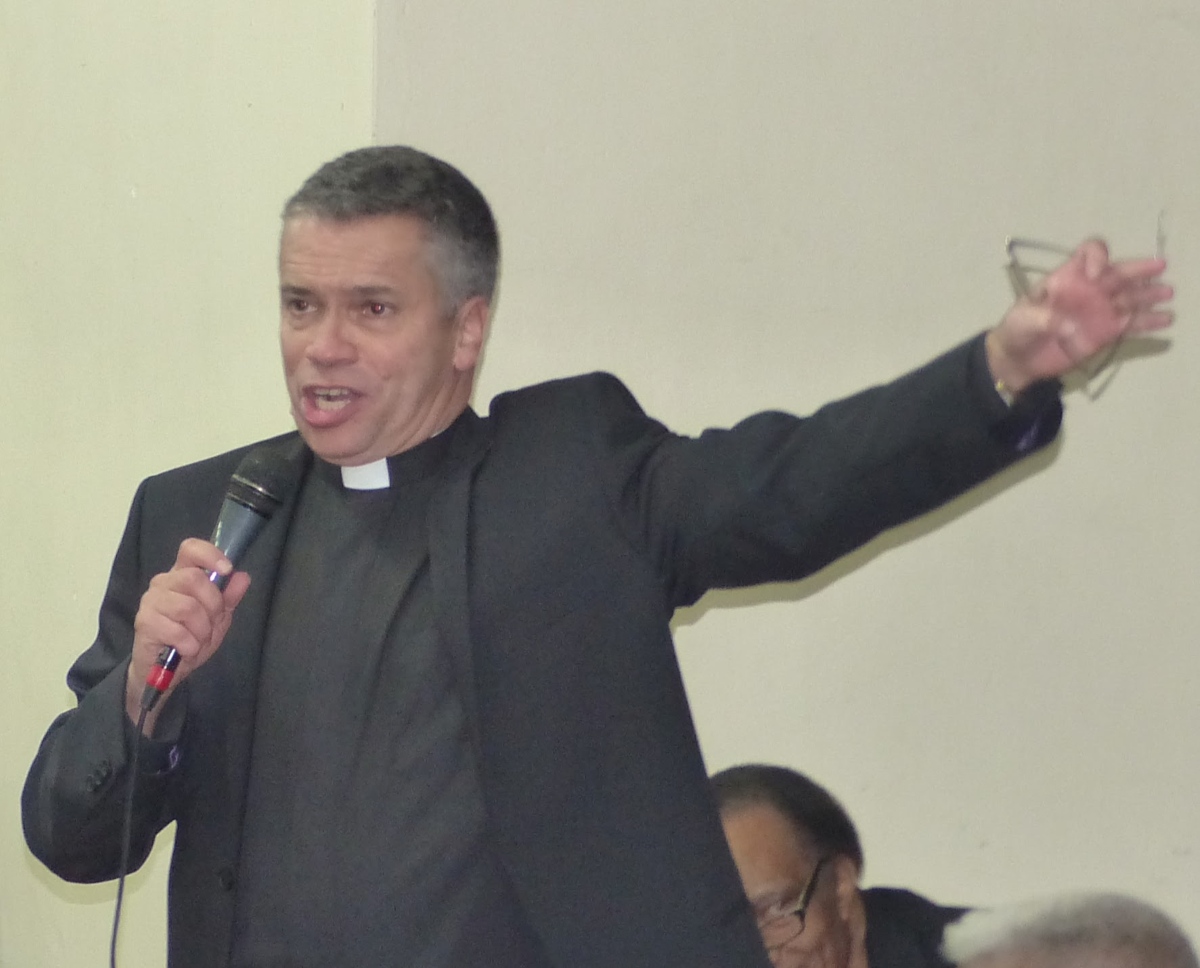
Barbadian David Tudor, a former Church of England priest, has received a second lifetime ban from ministry after grooming and sexually abusing a 15-year-old girl.
This order follows a first ban for other sexual offences in October 2024, less than two years ago. The Southwark Bishop’s Disciplinary Tribunal called Tudor’s actions “egregious and of the utmost seriousness” and pointed to a “deliberate and damaging failure to comply with the high standards of Christian behaviour”. The tribunal found that Tudor had sex with a girl, referred to as “Z”, when she was only 15. After she spoke out, Z received hate mail and attempted to take her own life.
Z attended St Bede’s school in Redhill, Surrey, where Tudor was the chaplain. She turned to him for guidance, but instead experienced six months of grooming and abuse. Although she confided in friends and reported the abuse to the Area Bishop of Croydon, Wilfred Wood, the first black Bishop and a fellow Barbadian, nothing was done. This led to police involvement in 1987.
This new complaint, upheld by a Southwark diocesan tribunal, comes after Tudor was already banned from ministry for life in October 2024. At that time, he admitted abusing two girls between 1982 and 1989. Yet the full story is far wider than individual criminal acts: it exposes systemic failures that allowed Tudor to continue to abuse young girls despite allegations about him becoming known to senior individuals within the Church.
Tudor was convicted in 1988 for indecently assaulting three girls, though the conviction was later quashed on technical grounds. At the time, the Church banned him, but only temporarily. Within five years, he was back in ministry and, over the following decades, rose to become a rector, area dean, and even an honorary canon.
By the time Tudor was appointed honorary canon in 2015, senior figures, including the Archbishop of York Stephen Cottrell, were aware of a safeguarding agreement restricting Tudor from being alone with children or entering schools. They also knew he had paid compensation to a victim. Still, Tudor was elevated to a senior position. Involving her at 15, but received a five-year suspension for misconduct.
A BBC investigation in December 2024, which included an interview with the young lady about her experiences of abuse by Tudor, revealed major failings in how the Church handled Tudor’s case. Despite his history of misconduct, he was allowed to continue in ministry. Stephen Cottrell, now Archbishop of York and then Bishop of Chelmsford, kept Tudor in his post for 9 years and called him a “Rolls-Royce priest”.
The tribunal did not accept Tudor’s claims that Z was untruthful. They found Z’s account of the events to be consistent and convincing. In her victim impact statement, Z described the deep impact of the abuse, including a suicide attempt caused by intense shame and guilt.
In 2023, Z was shocked to learn that Tudor had been working in ministry in Canvey Island, Essex, for many years. The tribunal also noted that after the 1980s trial, Z received hate mail at home, which forced her family to move.
As a result of the abuse, Z lost her Christian faith, which is a serious consequence of Tudor’s actions. Bishop of Southwark, Rt Rev Christopher Chessun, thanked Z for her courage in coming forward and apologised for the pain she suffered. The Church is still working with independent reviewers to improve its safeguarding practices.
The Church of England’s promised safeguarding review, intended to address those questions, has now been delayed until early next year due to “new police information.” For an institution still rebuilding public trust in its safeguarding practices, this delay may frustrate those seeking transparency. Yet it also suggests there may be more to uncover.
